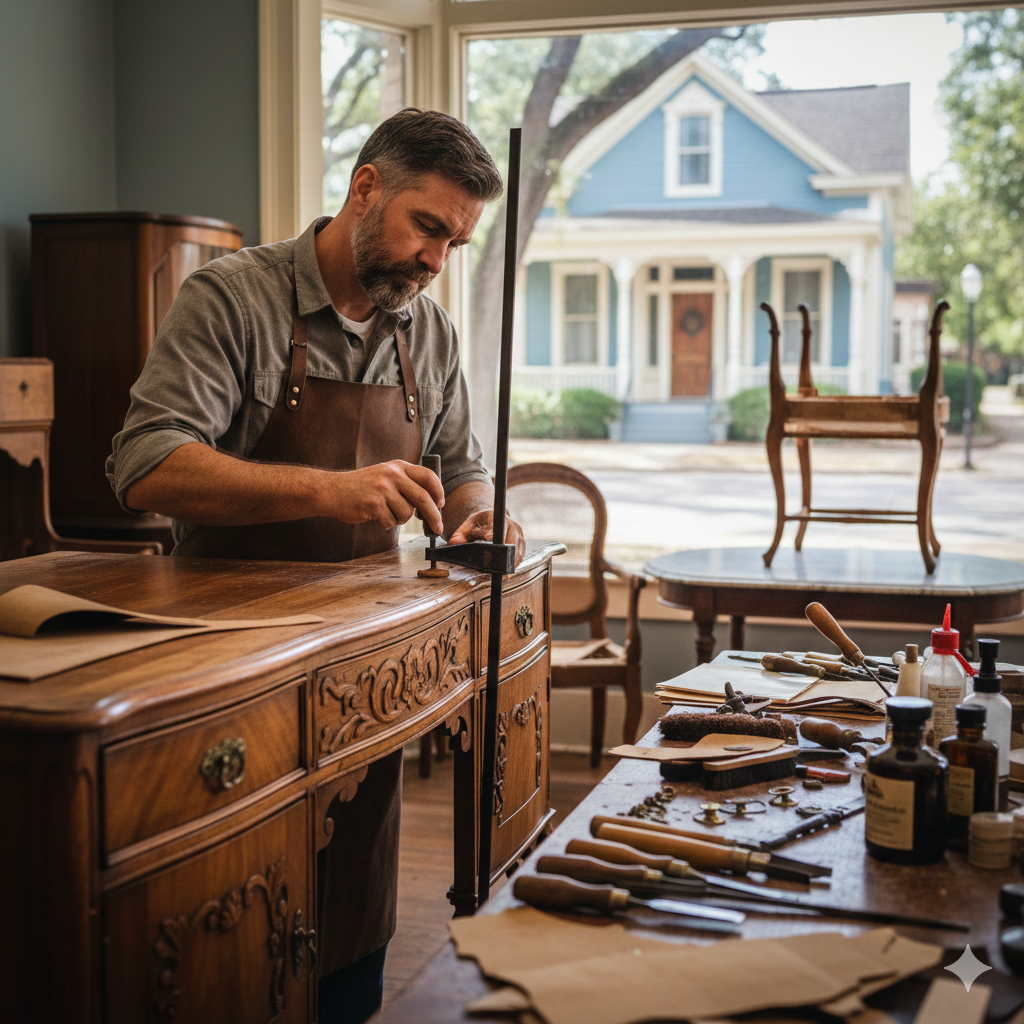
Preserving Heritage: Restoring Historic Furniture in San Antonio's King William District
Introduction San Antonio's King William District stands as one of the most celebrated historic neighborhoods in Texas. Established in the 1860s by prosperous German merchants, the area is defined by grand Victorian, Italianate, and Greek Revival homes lining the banks of the San Antonio River.
Many of these residences still house original or period-appropriate furniture passed down through generations. However, preserving these treasures requires specialized knowledge that goes far beyond standard furniture repair. This guide explores the unique challenges and meticulous techniques involved in safeguarding King William's remarkable furniture heritage.
What Makes King William Furniture Special
The furniture found in King William homes reflects over 150 years of San Antonio's cultural evolution. Common pieces include Victorian-era parlor sets with intricate rosewood frames, Italianate marble-topped sideboards and Eastlake-style dressers, European imports brought by original settlers, and early Texas-made "Primitive" pieces crafted from native mesquite and pecan. These are not merely functional items; they are historical artifacts. Their value depends on authenticity, provenance, and the integrity of original materials.
Common Challenges for Historic Pieces
Environmental Stress (The San Antonio Climate)
The subtropical humidity in San Antonio is particularly harsh. Wood swells in the humid summers and contracts in the dry winters. This constant cycle causes joints to loosen, panels to crack, and delicate veneers to separate from their substrates.
Age-Related Wear
Over a century of use eventually takes its toll. Original animal-based glues dry out and become brittle, finishes oxidize and darken, and period hardware often corrodes.
Well-Intentioned "Quick Fixes"
Many pieces have been previously repaired using inappropriate modern materials — such as polyurethane over shellac or drywall screws instead of wooden pegs. Reversing these "repairs" is often the most delicate part of the restoration process.
Pest Threats
Older homes in King William and Southtown are susceptible to termites and powderpost beetles. These pests can devastate an antique from the inside out, often leaving only a thin, fragile shell of wood behind.
Restoration vs. Refinishing
Why It Matters
One of the most critical distinctions in antique care is the difference between restoration and refinishing. Refinishing — stripping the old finish to apply a new one — can be catastrophic for an antique's value. An original finish is a vital part of the piece's history. Collectors and appraisers often value a worn, original shellac patina far more than a fresh, modern coat. Refinishing an antique can reduce its market value by 50% or more.
Professional antique restoration focuses on conservation: cleaning, reviving, and carefully stabilizing the piece to honor its original character.
Our Restoration Process
Assessment
We begin with a thorough evaluation of the construction, wood species, and original finish to ensure our approach is historically accurate.
Structural Repair
We disassemble loose joints and re-bond them using traditional hide glue. Unlike modern epoxies, hide glue is reversible, ensuring the piece can be maintained for another hundred years without damage.
Veneer Conservation
We source matching wood species and grain patterns to hand-cut replacement pieces for lifting or missing veneer, creating a seamless, invisible repair.
Finish Revival
We use techniques like amalgamation to re-level original shellac finishes, removing water marks and scratches while preserving the aged patina.
Hardware and Upholstery
Original brass is cleaned by hand rather than replaced. If upholstery is required, we utilize period-appropriate fabrics and traditional methods (such as horsehair padding) to maintain the piece's soul.
Caring for Your Collection
To protect your investment, we recommend the following
Climate Control
Maintain indoor humidity between 45–55%.
Light Protection
Use UV-filtering window films to prevent finishes from bleaching.
Gentle Maintenance
Dust with a soft cloth and avoid commercial polishes containing silicone, which can damage old finishes over time.
Preserve Your Piece of San Antonio History
The furniture within a King William home is an integral part of the Texas story. Whether you have a family heirloom or a recently acquired period piece, professional restoration ensures these treasures endure for the next generation.
Ready to restore your historic furniture? Contact Weathersby Guild for a private consultation at (210) 251-3019. We offer professional pickup and delivery throughout the San Antonio metro area, including King William, Southtown, Monte Vista, and Alamo Heights.
Need Professional Furniture Restoration?
Our expert craftsmen are ready to restore your treasured pieces. Get a free estimate today!
Related Articles
The Ultimate Guide to Antique Furniture Restoration
Unlock the secrets of antique furniture restoration. Learn how to preserve your heirlooms, understand the restoration process, and discover why professional expertise is crucial for maintaining the value and integrity of your treasured pieces.
How to Restore Water-Damaged Furniture: Expert Tips and Solutions
Water damage can wreak havoc on furniture. From warped wood to moldy upholstery, learn expert techniques for restoring water-damaged pieces and preventing future issues.
How to Restore Pet-Damaged Furniture: Expert Tips on Repair
Pets bring joy and love to our lives, but they can also damage our furniture. Learn expert techniques for repairing pet-damaged furniture and discover preventive measures to protect your pieces while maintaining a pet-friendly home.